from Ob/Gyn & Women’s Health – Medscape https://www.medscape.com/viewarticle/what-can-pediatrics-learn-adult-medicines-model-2025a1000won
via IFTTT
Just
from Ob/Gyn & Women’s Health – Medscape https://www.medscape.com/viewarticle/will-menopause-checks-change-womens-health-2025a1000wer?src=
via IFTTT
Just
from Ob/Gyn & Women’s Health – Medscape https://www.medscape.com/viewarticle/portugals-doctor-shortage-fuels-two-way-migration-wave-2025a1000wd9
via IFTTT
Just
from Ob/Gyn & Women’s Health – Medscape https://www.medscape.com/viewarticle/obesity-and-masld-epidemic-hiding-plain-sight-2025a1000vsw?src=
via IFTTT
Celebrating Native American Heritage Month with Chef Lois Ellen Frank, Ph.D.
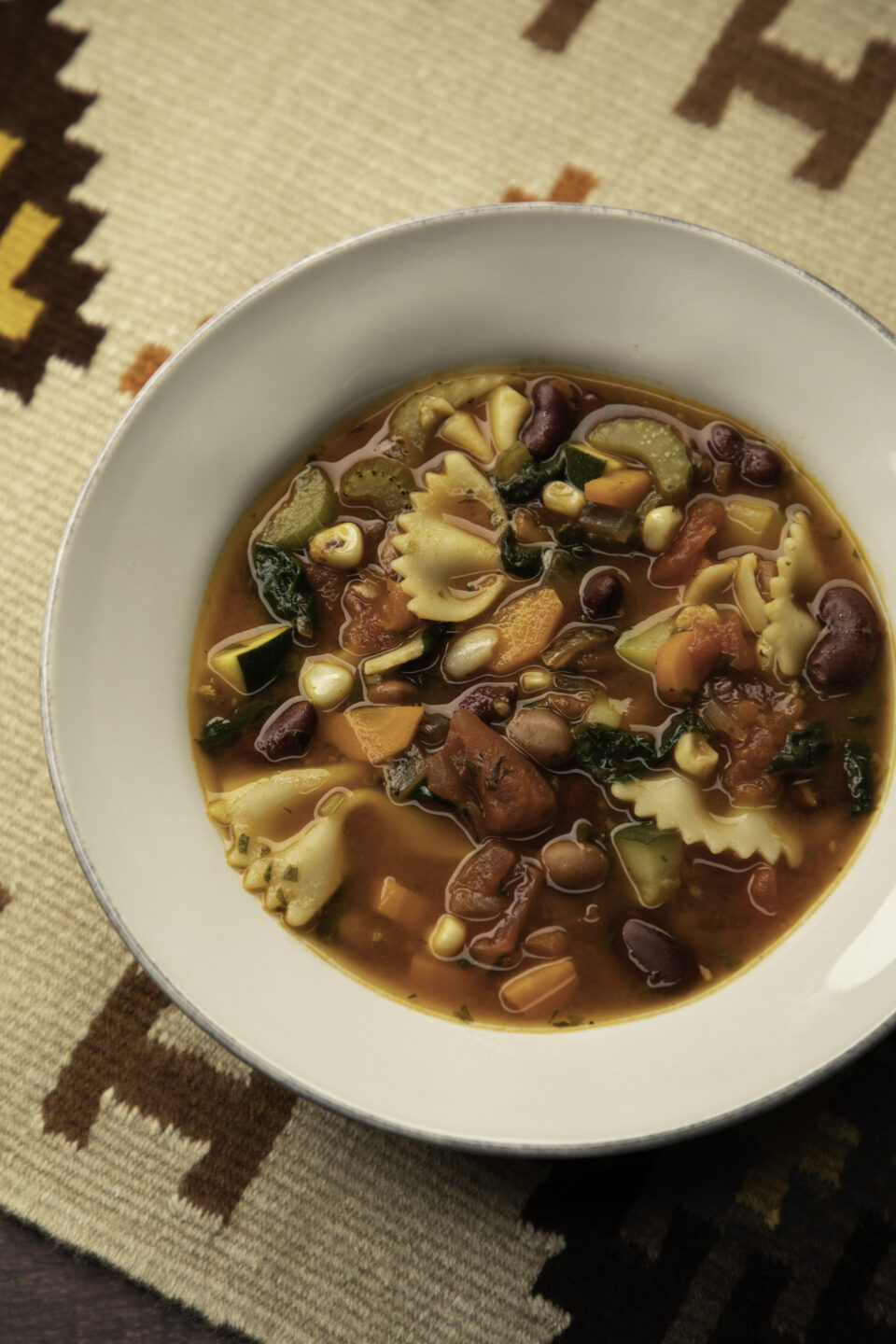
| In honor of National American Heritage Month, we are thrilled to share Chef Lois Ellen Frank’s Navajo Minestrone Soup with you.
For more about Chef Lois, check out this interview. |
 |
“Navajo Nation President Jonathan Nez and First Lady Phefelia Nez have been vocal proponents of healthy eating. President Nez found that plant-based eating shortened his recovery time after long-distance runs and helps him to maintain his weight loss. First Lady Nez provided us with one of her family-favorite soup recipes that we modified. We used the modified version for a course called Native Food for Life Online, offered through the American Indian Institute (AII) and the Physicians Committee for Responsible Medicine (PCRM). Minestrone is its Italian name, but the ingredients in this soup originated in the Americas. Chef Walter Whitewater said that growing up on the Navajo Nation, he used to harvest wild onions, carrots, garlic, and spinach. With the addition of frozen corn, canned beans, and zucchini squash, as well as the pasta, all foods that most community members have on hand or receive as part of the Food Distribution Program on Indian Reservations (FDPIR), our version of this recipe is a favorite of Chef Walter. Serve with No Fry Frybread, No Fry Blue Corn Frybread, Homemade White Corn Tortillas, or Blue Corn Tortillas.” – Chef Lois Ellen Frank
Navajo Minestrone Soup
|
Ingredients Makes approximately 2 quarts 2 cups cooked whole-grain pasta, such as mini farfalle (bow-tie pasta), penne, or elbows (approx. 1 cup uncooked) 1 tablespoon bean juice or water 1 small yellow onion, diced (approx. 1 cup) 3 carrots, peeled, cut into ⅛-inch-thick sticks, and halved into half-moon slices (approx. 1 cup) 2 stalks celery, sliced (approx. 1 cup) ½ cup frozen sweet corn kernels 1 tablespoon roasted garlic 1 zucchini, cut into ½-inch cubes (approx. 1 cup) 1 (15 oz.) can diced tomatoes, organic and no salt added, if possible 2 tablespoons tomato paste 1 cup spinach, fresh or frozen 5 cups water 1 (15 oz.) can dark red kidney beans, drained and rinsed (approx. 1½ cups) 1 (15 oz.) can pinto beans, drained and rinsed (approx. 1½ cups) 1 tablespoon fresh basil, finely chopped ½ teaspoon fresh oregano, finely chopped ½ teaspoon fresh thyme, finely chopped 2 teaspoons New Mexico red chile powder, mild 1 tablespoon flat leaf parsley, finely chopped ¼ teaspoon black pepper, or to taste (optional) |
 |
Instructions
In a large, cook the pasta according to the package directions. Remove from heat, drain the cooking water, rinse with cold water to stop the pasta from cooking, and set aside.
In a separate soup pot, heat the bean juice over medium-high heat until hot but not smoking. Sauté the onion for approximately 4 minutes, stirring occasionally to prevent burning. Add the carrots and the celery, and cook for an additional 5 to 6 minutes, stirring but letting the vegetables begin to caramelize. Add the corn and cook for another 2 minutes, stirring once to prevent burning. Add the roasted garlic and cook for another minute, stirring constantly to mix the garlic into the other ingredients. (The bottom of your pan will turn brown, and the vegetables should begin to caramelize.) Add the zucchini and cook for another 3 minutes, stirring to prevent burning. Add the diced tomatoes and tomato paste, stirring to completely mix into the other vegetables and deglaze the bottom of the pan. Add the spinach and water and bring to a boil. Then cover, reduce the heat to medium low, and let simmer, covered, for 10 minutes, stirring once or twice.
Add the canned kidney and pinto beans, stirring them to blend with all the ingredients, then add the basil, oregano, thyme, red chile powder, flat leaf parsley, and black pepper, if using. Return to a boil, then reduce the heat and let simmer for another 10 minutes.
Taste, season with more of any of the spices, if desired. Add the cooked pasta, stir, and bring to a boil. Cook for an additional 1 to 2 minutes until the soup is completely hot. (Do not cook the soup too long, as the cooked pasta may become overcooked.) Remove from heat. Serve.
Recipe adapted from Seed to Plate, Soil to Sky: Modern Plant-Based Recipes Using Native American Ingredients by Lois Ellen Frank with Culinary Advisor Walter Whitewater. Copyright © 2023 by Lois Ellen Frank. Published by Balance Publishing, an imprint of Hachette Book Group. All rights reserved.
You can find Chef Lois Ellen Frank here.
from NutritionFacts.org https://nutritionfacts.org/blog/celebrating-native-american-heritage-month-with-chef-lois-ellen-frank-ph-d/
via IFTTT
Just
from Ob/Gyn & Women’s Health – Medscape https://www.medscape.com/viewarticle/osteoporosis-importance-diagnosis-adults-younger-than-50-2025a1000wcf
via IFTTT
Just
from Ob/Gyn & Women’s Health – Medscape https://www.medscape.com/viewarticle/doctors-mystery-cancer-gives-her-new-medical-education-2025a1000uvz
via IFTTT
Just
from Ob/Gyn & Women’s Health – Medscape https://www.medscape.com/viewarticle/were-curing-obesity-far-more-people-apparently-have-it-2025a1000v9w?src=
via IFTTT
Plant-Based Hospital Menus
The American Medical Association passed a resolution encouraging hospitals to offer healthy plant-based food options.
“Globally, 11 million deaths annually are attributable to dietary factors, placing poor diet ahead of any other risk factor for death in the world.” Given that diet is our leading killer, you’d think that nutrition education would be emphasized during medical school and training, but there is a deficiency. A systematic review found that, “despite the centrality of nutrition to a healthy lifestyle, graduating medical students are not supported through their education to provide high-quality, effective nutrition care to patients…”
It could start in undergrad. What’s more important? Learning about humanity’s leading killer or organic chemistry?
In medical school, students may average only 19 hours of nutrition out of thousands of hours of instruction, and they aren’t even being taught what’s most useful. How many cases of scurvy and beriberi, diseases of dietary deficiency, will they encounter in clinical practice? In contrast, how many of their future patients will be suffering from dietary excesses—obesity, diabetes, hypertension, and heart disease? Those are probably a little more common than scurvy or beriberi. “Nevertheless, fully 95% of cardiologists [surveyed] believe that their role includes personally providing patients with at least basic nutrition information,” yet not even one in ten feels they have an “expert” grasp on the subject.
If you look at the clinical guidelines for what we should do for our patients with regard to our number one killer, atherosclerotic cardiovascular disease, all treatment begins with a healthy lifestyle, as shown below and at 1:50 in my video Hospitals with 100-Percent Plant-Based Menus.
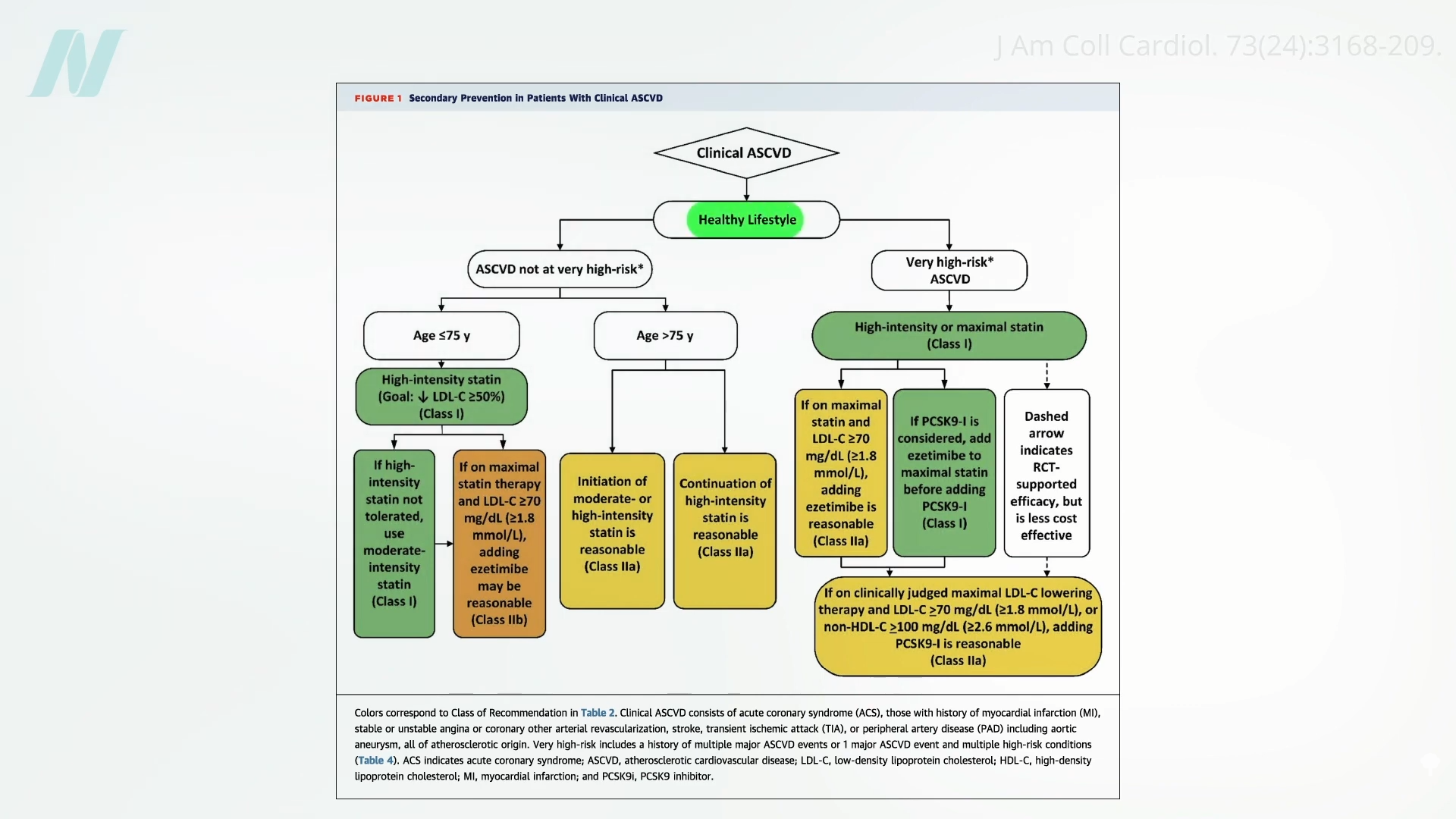
“Yet, how can clinicians put these guidelines into practice without adequate training in nutrition?”
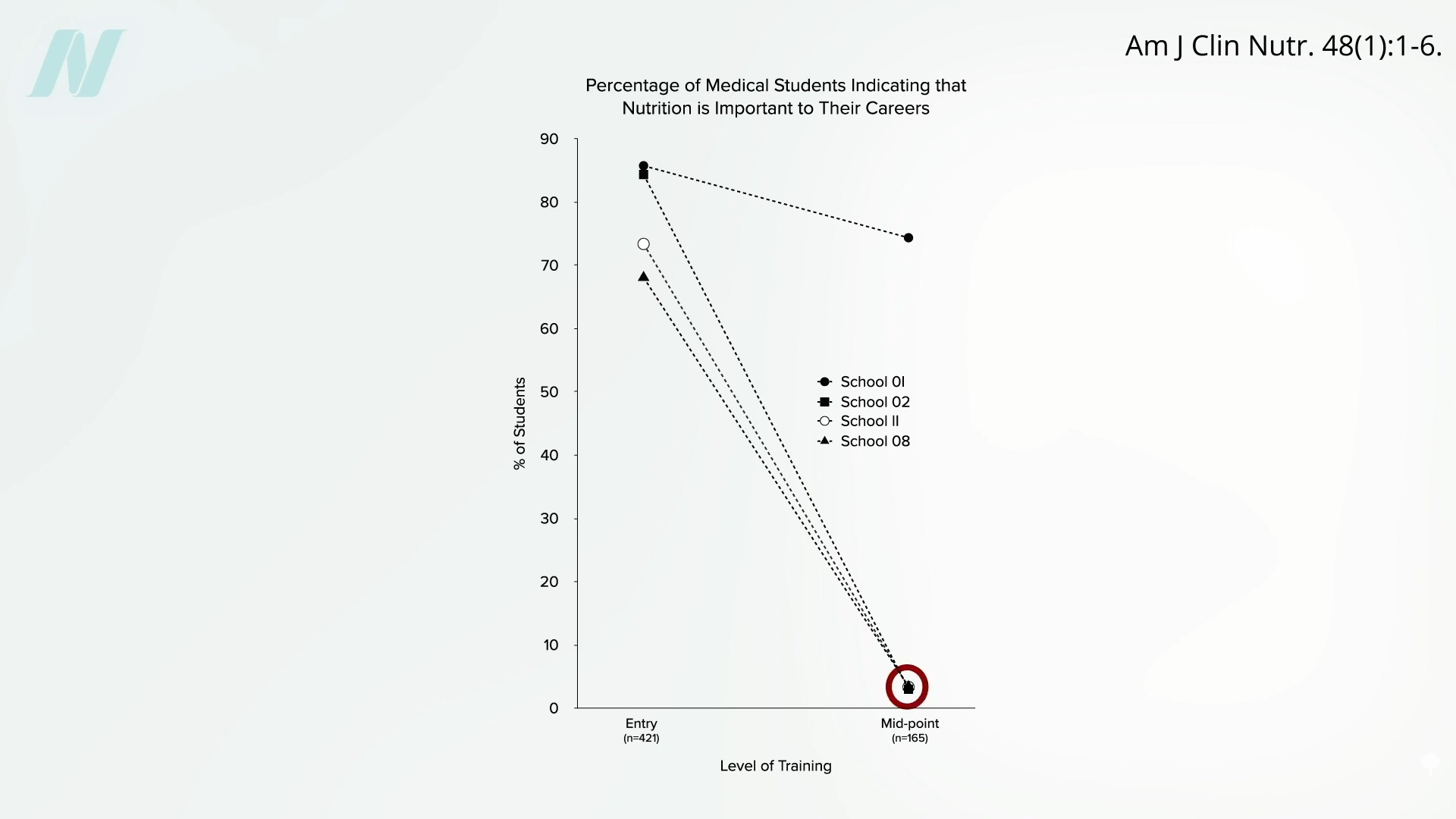
Less than half of medical schools report teaching any nutrition in clinical practice. In fact, they may be effectively teaching anti-nutrition, as “students typically begin medical school with a greater appreciation for the role of nutrition in health than when they leave.” Below and at 2:36 in my video is a figure entitled “Percentage of Medical Students Indicating that Nutrition is Important to Their Careers.” Upon entry to different medical schools, about three-quarters on average felt that nutrition is important to their careers. Smart bunch. Then, after two years of instruction, they were asked the same question, and the numbers plummeted. In fact, at most schools, it fell to 0%. Instead of being educated, they got de-educated. They had the notion that nutrition is important washed right out of their brains. “Thus, preclinical teaching”— the first two years of medical school—“engenders a loss of a sense of the relevance of the applied discipline of nutrition.”
Following medical school, during residency, nutrition education is “minimal or, more typically, absent.” “Major updates” were released in 2018 for residency and fellowship training requirements, and there were zero requirements for nutrition. “So you could have an internal medicine graduate who comes out of a terrific program and has learned nothing—literally nothing—about nutrition.”
“Why is diet not routinely addressed in both medical education and practice already, and what should be done about that?” One of the “reasons for the medical silence in nutrition” is that, “sadly…nutrition takes a back seat…because there are few financial incentives to support it.” What can we do about that? The Food Law and Policy Clinic at Harvard Law School identified a dozen different policy levers at all stages of medical education and the kinds of policy recommendations there could be for the decision-makers, as you can see here and at 3:48 in my video.
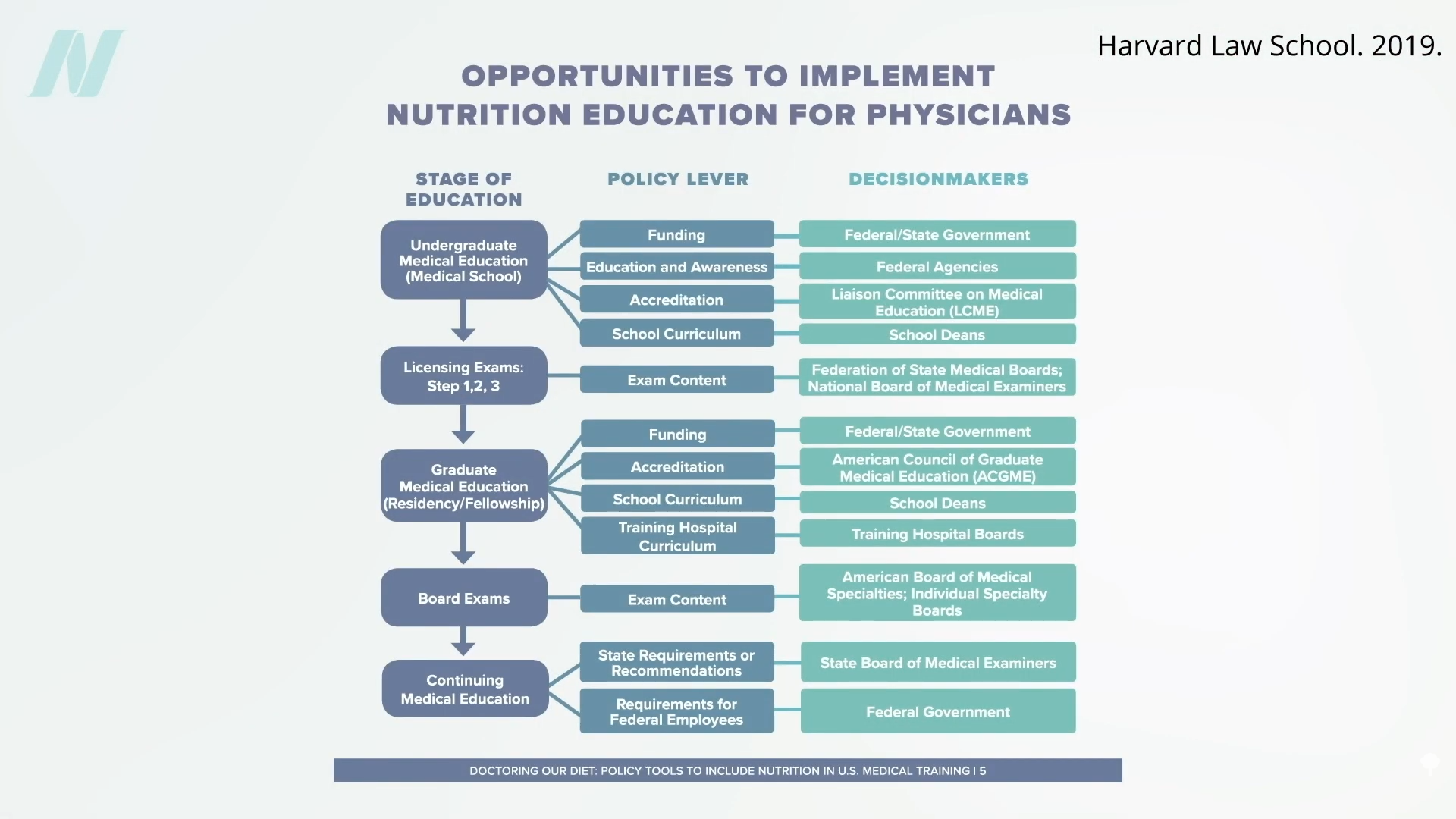
For instance, the government could require doctors working for Veterans Affairs (VA) to get at least some courses in nutrition, or we could put questions about nutrition on the board exams so schools would be pressured to teach it. As we are now, even patients who have just had a heart attack aren’t changing their diet. Doctors may not be telling them to do so, and hospitals may be actively undermining their future with the food they serve.
The good news is that the American Medical Association (AMA) has passed a resolution encouraging hospitals to offer healthy food options. What a concept! “Our AMA hereby calls on [U.S.] Health Care Facilities to improve the health of patients, staff, and visitors by: (a) providing a variety of healthy food, including plant-based meals, and meals that are low in saturated and trans fat, sodium, and added sugars; (b) eliminating processed meats from menus; and (c) providing and promoting healthy beverages.” Nice!
“Similarly, in 2018, the State of California mandated the availability of plant-based meals for hospital patients,” and there are hospitals in Gainesville (FL), the Bronx, Manhattan, Denver, and Tampa (FL) that “all provide 100% plant-based meals to their patients on a separate menu and provide educational materials to inpatients to improve education on the role of diet, especially plant-based diets, in chronic illness.”
Let’s check out some of their menu offerings: How about some lentil Bolognese? Or a cauliflower scramble with baked hash browns for breakfast, mushroom ragu for lunch, and, for supper, white bean stew, salad, and fruit for dessert. (This is the first time a hospital menu has ever made me hungry!)
The key to these transformations was “having a physician advocate and increasing education of staff and patients on the benefits of eating more plant-based foods.” A single clinician can spark change in a whole system, because science is on their side. “Doctors have a unique position in society” to influence policy at all levels; it’s about time we used it.
Doctor’s Note
For more on the ingrained ignorance of basic clinical nutrition in medicine, see the related posts below.
from NutritionFacts.org https://nutritionfacts.org/blog/plant-based-hospital-menus/
via IFTTT
Just
from Ob/Gyn & Women’s Health – Medscape https://www.medscape.com/viewarticle/no-time-unplug-europes-doctors-long-balance-2025a1000w2s
via IFTTT
 Frank Herd